Best Website Builder for Contractors: When a DIY Site Is Enough and When It Isn’t
A contractor’s website does not need to win design awards. It needs to do a job.
That job is simple to describe and surprisingly easy to miss. Your site should make a stranger trust you fast enough to call, fill out a form, or request an estimate. If it looks decent but hides your phone number, loads poorly on a phone, or leaves visitors guessing whether you serve their area, it is not helping the business. It is just sitting there.
That is why the question is not only what the best website builder for contractors is. The better question is whether a website builder is the right tool for your business at this stage. For some contractors, DIY is a smart, lean move. For others, it becomes the expensive cheap option, the kind that costs less upfront and more in missed leads, delays, and rework.
I have seen both outcomes. A straightforward local service company with solid photos, clear service pages, and someone in the office willing to keep things current can do perfectly well with a builder. I have also seen busy owners lose weeks trying to “save money” on a site they never really finish, only to hire a web designer for contractors later and pay twice, once in cash and again in lost momentum.
The decision comes down to complexity, time, and consequences.
What a contractor website actually needs to do
Before comparing platforms, it helps to strip away the noise. Contractors do not need endless features. They need a credible online presence that supports the way homeowners and property managers shop.
Most visitors are checking a handful of things very quickly. They want to know what you do, where you work, how to contact you, and whether your work looks legitimate. If they have to pinch and zoom on mobile, dig through vague pages, or wonder if the business is still active, trust drops fast.
A good contractor site keeps current information visible, works well on mobile, and puts contact details where nobody can miss them. That sounds basic because it is basic, but basic is where many sites fail. Outdated announcements, old pricing references, expired promotions, and half-finished pages make people hesitate. When someone is choosing between three local contractors, hesitation usually means they click the back button.
This is also where many business owners get distracted by the wrong question. They ask whether the homepage looks modern enough. The more useful test is whether the site supports a customer task. Can a homeowner find your services, understand whether you are a fit, and take the next step without friction? If not, the problem is not cosmetic.
DIY builders are good at one thing, and that thing matters
The strongest case for a website builder is affordability. If you are asking how much does a contractor website cost, the lower-cost answer is usually DIY. Website builders are widely considered the most budget-friendly path because you are trading money for your own time. Instead of paying a large project fee, you pay the platform and handle setup yourself.
That can be a very good trade.
If your business needs a clean online presence, basic lead capture, and a place to show work and contact information, a builder can get you there. This is especially true for newer companies, smaller local operators, and contractors testing a new market or service line. A remodeler with ten strong project photos, a clear service area, and a working inquiry form does not necessarily need a custom build on day one.
A builder can also force useful discipline. It makes you answer practical questions: What are your core services? Which photos actually help sell jobs? What should a visitor do next? Sometimes a simple builder setup is enough to get a company out of brochure mode and into lead-generation mode.
The advantage is not only cost. Speed matters too. A business owner can get something live far faster than a traditional custom project, especially if the alternative is waiting months while content, approvals, and revisions drag on.
When DIY is enough
There are contractors who should absolutely start with a builder and not feel self-conscious about it. That decision is often more disciplined than hiring a designer too early.
Here are the cases where DIY usually makes sense:
- You need a simple, credible site, not a complex marketing machine.
- You or someone on your team can keep content current.
- Your services are easy to explain without custom functionality.
- You mainly need calls and form submissions from local search.
- Your budget is tight enough that getting live now matters more than polishing every detail.
A small flooring company is a good example. If the business offers a focused set of services and has clear project photography, a basic flooring contractor website design on a builder can work well. The same can be true for a newer home remodeling website design when the company is still narrowing its ideal project type. A practical, mobile-friendly site with clear contact information can carry a lot of weight.
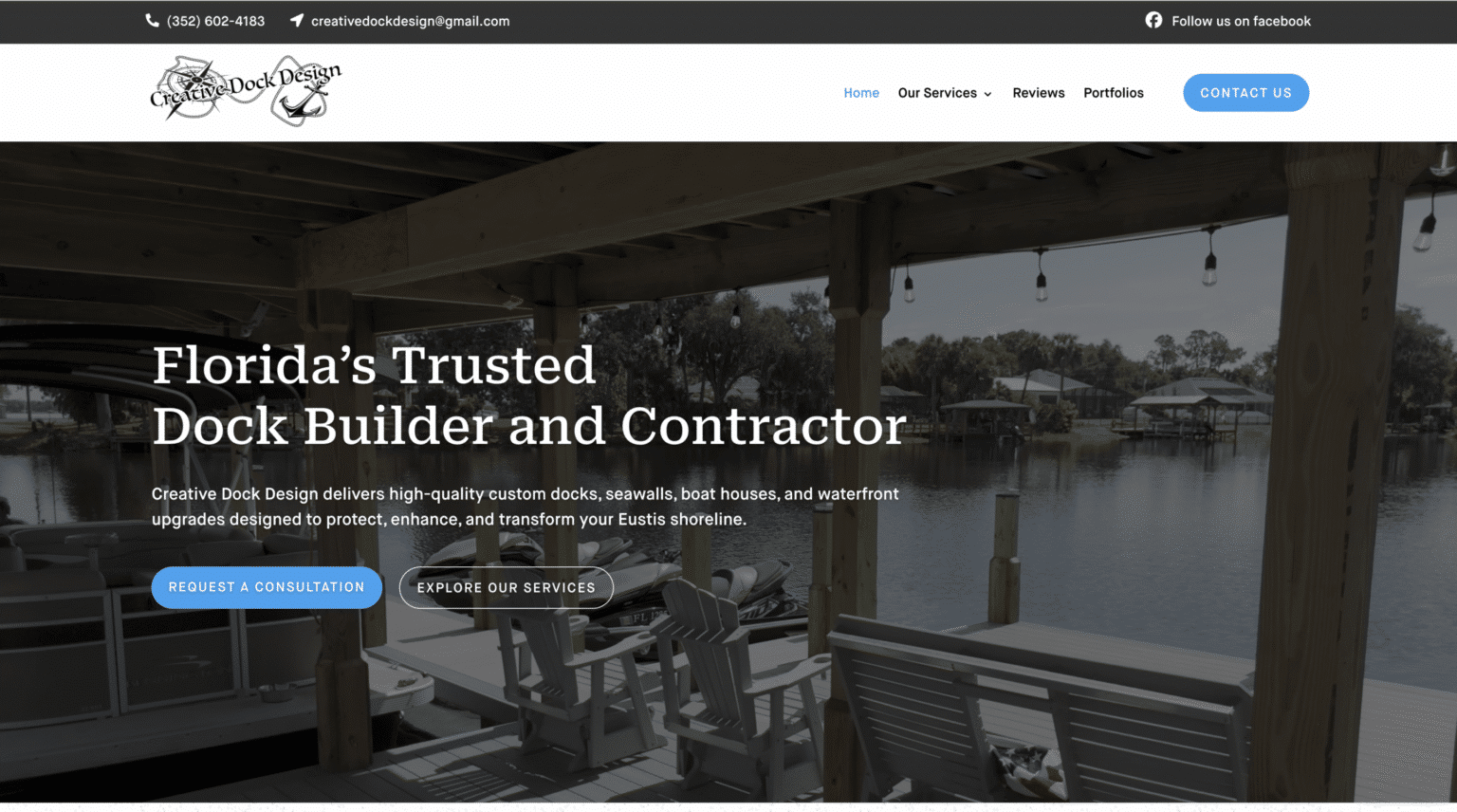
The same logic applies to niche trades, at least at first. A company exploring concrete coating website design or epoxy flooring website design might not need a highly custom site if the immediate goal is simply to show finished work, list service areas, and collect estimate requests. A local dock builder website design can also start simple if the business model is straightforward and the owner already has quality photos and concise service descriptions.
The builder is not the star in those scenarios. The clarity of the offer is.
Where DIY starts to break down
Problems begin when a business owner expects a builder to solve strategy, messaging, positioning, and upkeep. It will not.
A site builder gives you tools. It does not decide what your homepage should emphasize, what service pages are missing, why leads are dropping off, or how to organize content so customers move naturally toward contact. And it definitely does not create time in your week to manage updates, photos, revisions, and troubleshooting.
This is where a lot of contractor sites stall out. The platform itself may be perfectly capable, but the business does not have the internal time or expertise to make good use of it. The owner starts in the evening, tweaks a template on weekends, gets interrupted by actual jobs, and six weeks later the site is technically live but half-baked. The gallery is thin. The copy is generic. Service pages are vague. Nobody has checked how it reads on a phone.
Worse, the site can look “fine” to the owner because they know the business already. Customers do not. They need obvious paths and immediate reassurance.
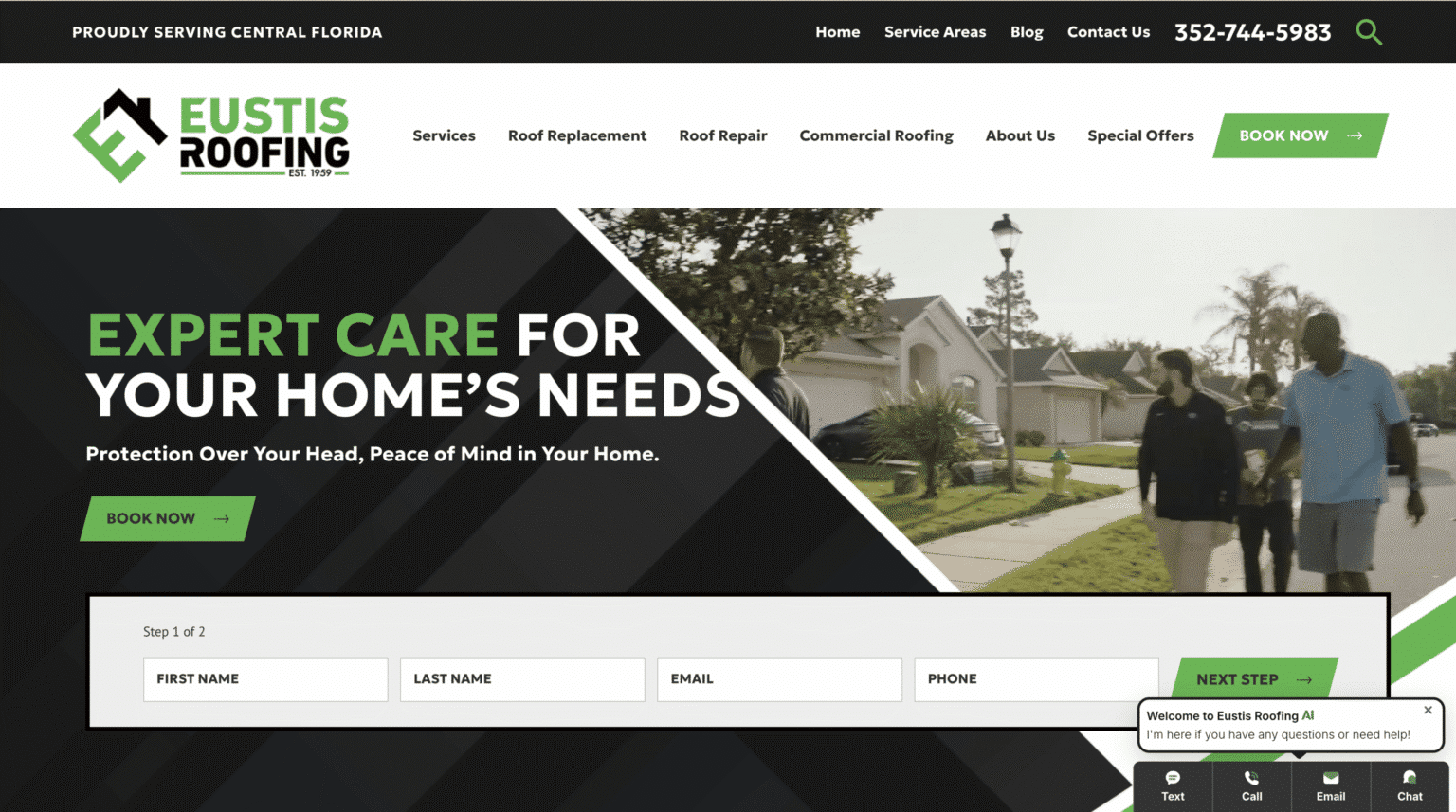
More specialized categories often expose these limits quickly. A mold remediation website design has to build trust fast because the service itself carries stress and urgency. A pool screen enclosure website design may need strong visuals and clean explanations because homeowners often compare options based on appearance as much as function. A home remodeling website design usually needs a sharper presentation because project values are higher and buyers are weighing credibility carefully. In those categories, weak messaging can cost real revenue.
The hidden cost of doing it yourself
People often ask how much does a contractor website cost, but they usually mean upfront dollars. That is only part of the picture.
A DIY site can be inexpensive to launch and costly to maintain if nobody owns it. If updates lag, contact forms are neglected, and mobile issues go unfixed, the site starts leaking trust. Those costs do not show up as a line item. They show up as leads that never call, forms that never get completed, and prospects who choose a competitor that simply felt easier.
There is also the opportunity cost of owner time. A contractor with a full install schedule or a sales manager trying to close estimates should not automatically be the person wrestling with layouts, page edits, and image sizing. Time spent learning web tools is time not spent on production, sales, hiring, or customer follow-up.
That is why a cheaper path is not always the lower-cost path.
Freelancer, agency, or managed service?
Once DIY stops making sense, the next decision is not automatically “hire an agency.” There are three common alternatives, and each suits a different kind of contractor.
A freelancer can make sense if you already know what you want and mainly need help executing it. This route can be useful when the problem is design setup, polish, or custom touches rather than a broader marketing strategy. It often sits between DIY and agency pricing, though actual cost varies widely by scope and experience.
An agency is usually the better fit when your needs are broader. If the website requires more strategy, more custom development, or more involved planning, an agency becomes easier to justify. This is often the point where a contractor website redesign is less about appearance and more about fixing a bigger business issue, such as poor user flow, weak service positioning, or conversion problems.
Then there is the managed website for small business model, which deserves more attention than it gets. Managed options typically bundle the parts contractors tend to ignore until something breaks: hosting, security, backups, updates, and support. That can be a relief for owners who do not want another system to babysit. It turns the website from a project into an operating service.
For many small contractors, that model hits a practical middle ground. You avoid the heavy lift of DIY and the larger commitment of a fully custom engagement, while still getting ongoing maintenance and support. That matters more than people think. A site is not done when it launches. It either gets maintained or it slowly gets worse.
One example is Scalable Websites, a Houston, Texas based managed website provider for contractors nationwide that offers professionally designed sites on a monthly subscription with hosting, security, unlimited updates, a dedicated project manager, and launches in days. That kind of arrangement will not be right for every business, but it reflects why managed service has become attractive to small teams that want convenience and continuity.
Signs your current site needs more than a template refresh
Some contractors do not need a brand-new path. They need an honest diagnosis.
If your current site has one or more https://localmarketingjournal354.swiftnestly.com/posts/how-to-get-more-leads-for-contractors-in-2026-with-local-seo-google-business-profile-and-fast-mobile-pages-4 of these issues, a basic DIY tweak may not be enough:
- Important information is outdated or inconsistent.
- The mobile experience feels clumsy or hard to use.
- Contact details are not obvious right away.
- Visitors have to work too hard to understand your services.
- The site looks live, but it does not seem to generate action.
These are not minor complaints. They go straight to trust and conversions. A website should help users complete an action you care about, such as submitting a form or reaching a thank-you page after an inquiry. If the path to that action feels confusing, the site is underperforming even if it looks respectable.
I have seen this with contractor website redesign projects where the owner was convinced the main issue was “the look.” After a closer review, the real problems were practical: outdated service information, weak mobile usability, hard-to-find contact details, and page structures that buried the next step. The redesign mattered, but not for vanity reasons. It mattered because the old site made it harder for customers to buy.
Niche contractors should be even more careful
The more specific your trade, the less you should rely on generic presentation.
A standard template can still work for a niche business, but only if the content does the heavy lifting. A concrete coating website design should not sound like a general handyman site with a few swapped-out photos. An epoxy flooring website design needs clear project examples and language that matches the buyer’s concerns. A dock builder website design should reflect the reality of that work, not just repeat broad phrases about “quality craftsmanship.”
The same applies to pool screen enclosure website design, flooring contractor website design, and mold remediation website design. Buyers in those categories often arrive with specific concerns, and they can tell quickly when a site is generic. They may not articulate it that way, but they feel it. Generic sites create doubt. Specific sites create confidence.
This is one of the strongest arguments for hiring help. Not because a builder cannot technically host the pages, but because someone needs to shape the message with care.
So, what is the best website builder for contractors?
If by “best” you mean cheapest path to a usable site, the best builder is the one you will actually finish, keep current, and use properly. A platform is only as good as the execution behind it.
If by “best” you mean best long-term decision for the business, then the answer depends on what kind of company you are running.
A solo or small local contractor with a narrow service offering may do well with a builder for quite a while. The simplicity is a strength. You stay lean, get online fast, and reserve cash for photos, operations, and sales follow-up.
A growing contractor with multiple service lines, inconsistent branding, outdated pages, or no time to manage web updates usually needs more than DIY. At that point, hiring a web designer for contractors, working with an agency, or choosing a managed website for small business is less about luxury and more about focus. You are paying to reduce drag and improve execution.
That distinction matters because many owners search for a platform when the real need is support.
A practical way to decide
Forget feature comparisons for a minute. Ask yourself three blunt questions.
First, do you have someone who can keep the site current every month? Not once at launch, every month.
Second, is your service simple enough that a strong template plus clear content will do the job?
Third, what happens if the site stays mediocre for another six to twelve months? If the answer is “not much,” DIY may be fine. If the answer is “we keep losing good opportunities,” then saving money upfront is probably the wrong metric.
That is the heart of the decision. Not whether a builder can technically create pages, but whether the business can support the website well enough for it to perform.
The strongest websites feel easy to the customer
Customers do not care how the site was built. They care whether it helps them make a confident decision.
If a DIY builder gives you a current, mobile-friendly, easy-to-contact site that clearly explains your services, then it is enough. More than enough, in many cases.
If DIY leaves you with outdated information, weak service pages, awkward mobile usability, or a site nobody on your team has time to maintain, then it is not enough. At that point, a freelancer, agency, or managed service is not an indulgence. It is the more efficient business move.
The best website builder for contractors is not always a builder at all. Sometimes the best choice is the option that gets the site launched properly, keeps it maintained, and lets you get back to running jobs instead of wrestling with web tasks at night.
That is usually the dividing line. If the website can stay simple and useful, build it lean. If the business has outgrown that simplicity, stop forcing a DIY solution and get the right level of help.